Are You Sure You Want to Continue
Printed from: https://jacobsmedia.com/you-sure-you-want-to-say-that/ on 10/17/2022
There were lots of big stories in the radio broadcasting industry here in the U.S. last week. But none was bigger than the two days Matt Siegel, morning icon at KISS 108 in Boston, kept us in limbo about whether he had quit his morning post or would calm down and return.
The Matty in the Morning Show has been a juggernaut – for decades – dominating mornings in one of the nation's most competitive radio markets. And at age 71, Siegel has showed no sign of stopping.
Until last Wednesday, when he did an on-air rant about being reportedly asked to stop joking about Demi Lovato on his show. That culminated in him apparently quitting on the spot after being told what notto talk about. Soon after, cooler heads prevailed – including Siegel's who quickly realized what he'd be walking away from if he followed through on his threat to hang up his headphones.
The next day, he was back on the air. And while all parties seemingly have moved on, nothing will change the reality that Siegel and KISS 108 probably racked up the most meters tuned into this show than on any other morning in the more than four decades he's been helming a.m. drive in Boston. Evidently, everyone moved on.
Some of the trades – and a few people I spoke to – assumed it was just another radio stunt. Whether it was or not, the reality is that Siegel's angry soliloquy generated massive buzz, followed by those aforementioned ratings as thousands tuned in to find out "the rest of the story."
One thing I've learned in my role as consultant is that most people have no clue what's really happening behind the closed doors of KISS 108 or any radio station going through a personnel issue. Everyone gossips, conjectures, and claims to know the scoop. But only Siegel, his management, and perhaps the iHeartMedia corner office know for sure.
For what it's worth, I don't think it was a stunt. It sounded a lot more like lots of pent up emotion that came tumbling out on impulse.
After all, isn't that what we pay our best personalities to do – impulsively respond and react to what's in front of them? And to do so with authenticity and entertainment value. It's improv in an air studio. That's when the magic happens.
But, it's not always funny. And unfortunately, that's also when disaster can strike.
How many personalities have instantly lost their gigs by blurting out something offensive, hurtful, or just stupid – on impulse? One of those untimely blurts that happen in the spur of the moment.
Sadly, it happens all the time, even to talent who are consistent performers. One slip can end it all, and that's why being a live, on-air performer can be dangerous. And when the drumbeats from advertisers, local civic leaders, the offended parties, and even in some cases, corporate, get loud enough, the inevitable happens.
Matt Siegel's time in grade and the power of his persona earned him a "Get Out of Jail Free Card" – this time around.
Howard Stern often benefitted from a similarly strong reputation that earned him the ability to withstand tough challenges and sticky situations.
That's when the apologists say, "Well, you know Howard" or "That's just Matty being Matty." Those accumulated cred points can provide insulation and distance from the dumpster fire taking place in the corner office.
But what if there was a way to prevent these incidents altogether? What if technology could somehow anticipate that talent is about to say something disturbing, offensive, license-threatening, or patently stupid?
And what if that same AI could freeze the moment and ask the host about to incinerate his career this timely question:
"You sure you want to say that?"
Seven words that might save a career, a few jobs, a lot of money, and untold heartache.
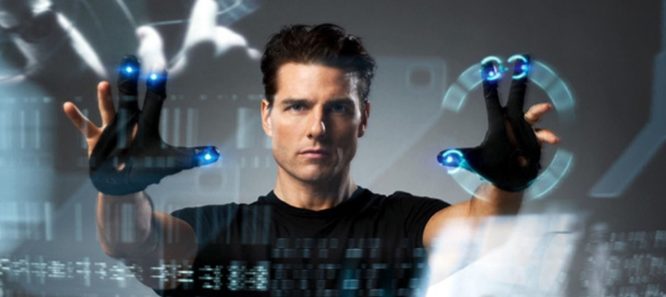
Do you remember the Steven Spielberg film Minority Report with Tom Cruise? Written by Philip K. Dick (Bladerunner, Total Recall), it's a story set in the near future where a handful of special people with highly intuitive powers (precogs) have the ability to "see" heated crimes (yes, impulses) before they're actually committed.
Cruise's character heads up the "PreCrime Unit" that gets these visions from the precogs minutes (or seconds) before criminal activity goes down so they can nab these would-be bad guys – before they can do heinous things.
Like most sci-fi tales, the system gets corrupted by greedy politicians and corporate bigwigs, leaving it up to Cruise to save society. (Spoiler alert: he does.) The movie was eerily ahead of its time, especially in discussions of the assets and deficits of "predictive policing," as well as AI connected to our purchases and web browsing (yes, very much like the way search and social work today).
I can sure think of some vanquished radio personalities that could have used pre-cognition to stop them from having a job-ending, career-imploding moment on the air.
Too bad they don't work in tech because there are now AI versions of precogs that can stop anyone from posting something that could get you shamed, banned, or otherwise treated like a thoughtless moron. Back when Lori Lewis worked for Jacobs Media, she kept a collection of dumb posts that turned out to be job-ending incidents by the famous as well as random folks who did something dumb – often on impulse.
More and more, tech companies are working to eliminate these tragic moments, both for the good of the offensive party as well as the rest of their users.
The dating app, Tinder, is a good example. It's easy to say something moronic and untoward, especially in the middle of the chase. But a new feature that Axios calls "pre-shaming" alerts losersbeforethey're about to post something that may be offensive, wrong-headed, or otherwise troublesome for both the user – and the platform.
Tinder's AI pre-analyzes the content, so before you hit "send," this helpful pop-up screen appears:
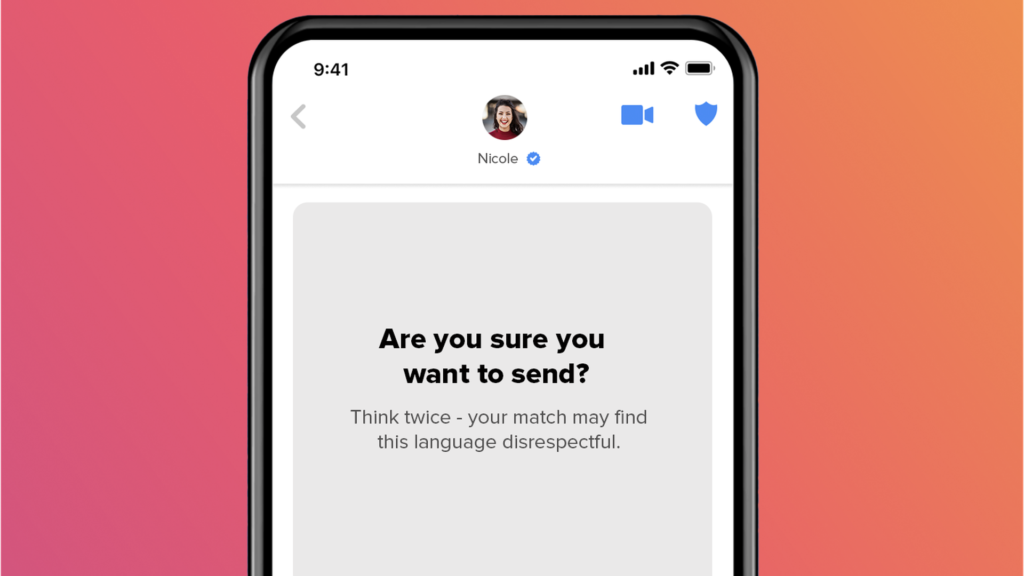
The result? Tinder reports these early warning pop-ups have reduced "potentially offensive language" by 10%.
This technology is like a digital "dump button" that actually goes into action before anything regrettable occurs.
It started on Twitter earlier this month. Maybe that's because the platform has become famous for "mean Tweets." While Twitter bans users who violate their standards – like the former Tweeter-in-Chief – this precog-like early warning system is designed to head off nasty behavior before it occurs.
Type something that looks problematic to the platform's AI engine, and a question appears:
"Want to review this before Tweeting?"
Translation: You sure you want to do this?
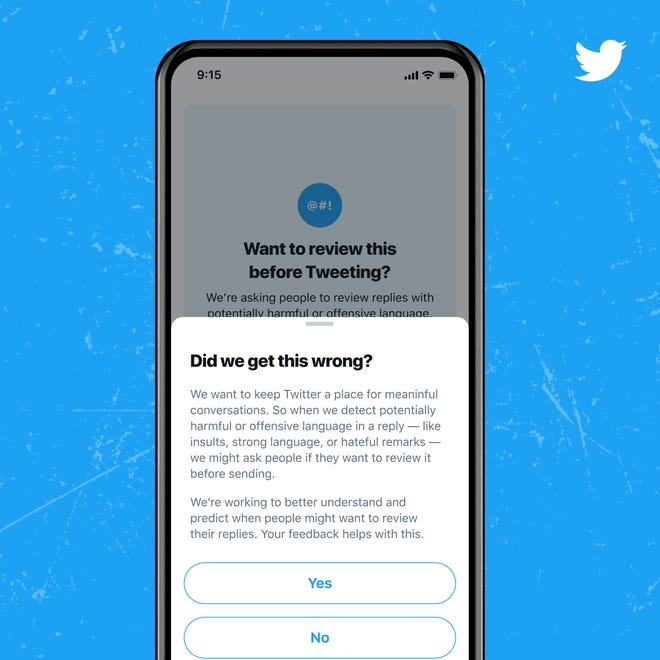
The potential wrongdoer gets three choices: edit the tweet, delete the tweet, or throw caution to the social media winds and let it fly.
Is it working?
Twitter toldUSA Todaythat after receiving the pre-shaming pop-up, more than a third changed their tweet – or didn't bother tweeting anything. Similar to Tinder's numbers, this has resulted in 11% fewer nasty tweets.
Where was this service when Trump was in the White House?
Or when Stern was on K-Rock?
Or when Matty got a little unhinged last week?
Perhaps this is the way we're headed with social media and web-based communication platforms. Either content is on-demand, or it is increasingly monitored and even policed to screen out objectionable content.
But is this self-censorship a positive use of technology? We are all taught to think before we start yammering. But some of us just don't seem to have that ability. This may be a case of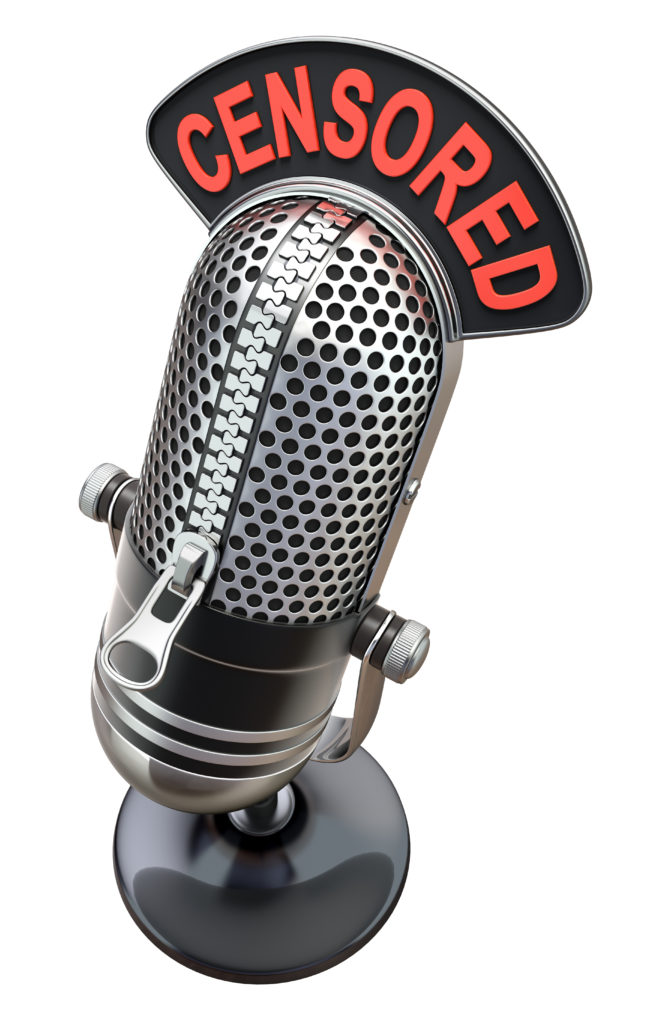 technology to the rescue for the masses. But for entertainers, is this the mindset we want them to adopt?
This post is not a rant about media censorship. But it's not hard to imagine an environment where live radio may become one of the last outlets where anything can happen at any time.
There's obviously a danger inherent in that equation, but these are the same conditions in which Orson Wells, Don Imus, Rush Limbaugh, and the Greaseman plied their respective crafts.
One of the impacts of voicetracking is that it has virtually eliminated these gaffs, faux pas, and other moments where someone's words are out there in the ether. But what has been lost in this process?
Has that technology beaten the spontaneity out of broadcast radio, to the point where truly engaging and entertaining moments have become all too few and far between?
While it is dispiriting and even devastating when a personality or team finds their livelihood threatened by an impulsive comment that slipped through on the air, it is also part of a difficult job. These are the rules in which the game is played.
There's no one asking those "seven clean words":
You sure you want to say that?
On live radio, anything can happen at any time without warning. Sometimes, its downright brilliant. But at other times, it morphs into one of those on-air death spirals.
Even Tom Cruise and the precogs can't prevent that from happening.
- Author
- Recent Posts

Fred Jacobs founded Jacobs Media in 1983, and quickly became known for the creation of the Classic Rock radio format.
Jacobs Media has consistently walked the walk in the digital space, providing insights and guidance through its well-read national Techsurveys.
In 2008, jacapps was launched - a mobile apps company that has designed and built more than 1,300 apps for both the Apple and Android platforms. In 2013, the DASH Conference was created - a mashup of radio and automotive, designed to foster better understanding of the "connected car" and its impact.
Along with providing the creative and intellectual direction for the company, Fred consults many of Jacobs Media's commercial and public radio clients, in addition to media brands looking to thrive in the rapidly changing tech environment.
Fred was inducted into the Radio Hall of Fame in 2018.
Source: https://jacobsmedia.com/you-sure-you-want-to-say-that/
0 Response to "Are You Sure You Want to Continue"
Post a Comment